

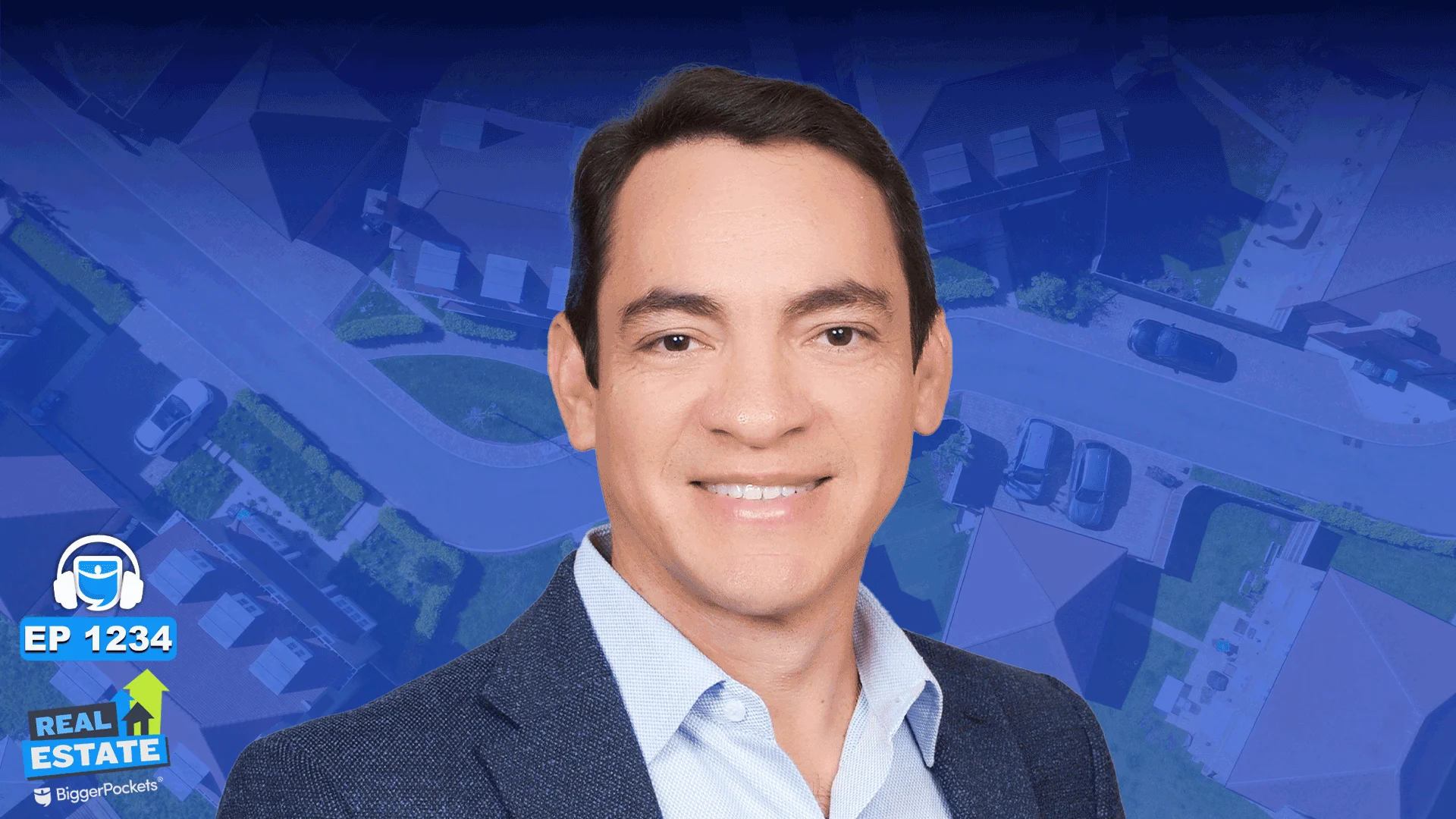
Don’t believe us? Today’s guest went from corporate life to early retirement, generating over $100,000 per year in cash flow thanks to a small, powerful rental property portfolio. He didn’t start with a ton of money, and he had no experience. But he followed a simple, genius strategy: Save, buy, repeat, pay off.
Vicente Garcia wanted to build a college fund for his children. When he moved to a new home, he realized he had an income-producing asset right in front of him. So, he turned his old primary residence into a rental, recognized its potential, and a few years later bought his first full-fledged investment property.
By combining savings from his job, recycling his properties’ cash flow, and using 401(k) loans (an incredibly underrated tool), Vicente grew to eight rental properties. His goal? Not to scale, but to slowly pay off the portfolio. Now, in his 50s, Vicente has six-figure cash flow, a paid-off rental portfolio of eight properties, and only one thing on his mind: what’s next?
Henry:
Eight rental properties. That’s all you need to retire early. While it may seem like you have to own dozens of rentals to reach six figures in passive income, today’s guest proves that a small rental portfolio can be just as powerful. Vicente Garcia had no experience in real estate investing at 41 years old, but he decided to turn his primary residence into a rental property to help him build a college fund for his kids. Now in his mid fifties, a portfolio of just eight properties not only pays for his kids’ college, but it has also retired him with six figures net cashflow, the secret, a simple but incredibly effective payoff plan. With just a handful of paid off rentals, Vicente was able to leave his corporate job, retire with six figures of income and spend more time with his kids, work for nonprofits, and ask the big question, what’s next? Follow Vicente’s strategy. And in a decade, you two could be retired early with fewer rentals than you can. What’s going on everybody? It is Henry co-host of the BiggerPockets podcast. Today we’re speaking with investor Vicente Garcia from Dallas, Texas. This is an incredibly inspiring story, so let’s jump right in. Vicente, welcome to the show.
Vicente:
Thank you, Henry. Thanks for having me.
Henry:
Oh, happy to do it, man. You’ve got an interesting story. So let’s start at the beginning. Tell us about your background and how you first got into this real estate thing.
Vicente:
My background is, I would say it’s more like the traditional corporate world, working in several companies and starting in real estate. I don’t know if it’s a coincidence, but the original plan, when we were trying to have a college fund, that was the first idea, let’s try to build a college fund for my case. So fast forward, we started investing, bought more properties, then I became a realtor. So I was kind of first an amateur and then became professional somehow if you’ll so all in, I’ve been investing for 16 years
Henry:
About
Vicente:
That in realtor for the last 10. So that’s going to be a quick for the journey.
Henry:
I think. That’s amazing. And by your standards, I’m still an amateur. I don’t have my license, but that’s okay. I’ll take the amateur status unless we’re talking about taxes. I am a real estate professional for tax purposes, but I think you are so successful. I think you glossed over a few things. You said I just bought a couple of properties. I would say oversimplifying it. So tell us about what that looked like. When was it when you bought your first one? Why did you buy it? How did you buy it?
Vicente:
Yes, yes. We bought our first home 20 years ago, 2005.
Started home, first kid, stayed in the home for four years, didn’t get to a point of hey, we wanted to move to a bigger home, have the second kid looking for changing the schools. So we bought the second home. But that was the point that as I mentioned before, we decided, hey, right now we don’t need to sell this to buy the second one. So the idea, hey, let’s start as a college fund. So that was idea. That was 2009. Fast forward another four years, 2013, tried to invest something in the stock market, really got burned down and all fairness, that was the times of the financial crisis, correct?
Maybe not the best time to invest in the stock market, but either way they decided hey, have their rental home for four years. And there were good opportunities back then. So again, you need to go back in time 2013 coming out the financial crisis, great deals, and we decided, hey, let’s have also some friends that were doing the same thing. Let’s now buy a home as just pure rental. Correct instead of the first one. That was kind of a first home then transition to rental and that’s how it was started and it went pretty quick. In that first year we bought three homes and the reason for that is for me was, okay, let’s see how it is. Let’s try it. It’s working, let’s repeat it. Correct, recent, repeat a little bit on on that first year, three homes. And then of course we continue for the next few years to continue building the portfolio.
Henry:
Okay, so 2013 you bought your first three as pure investments, but you started where I think a lot of people overlook starting, which is sometimes I talk to people, some of my students or I just talk to aspiring investors and they say, I’m looking to buy my first rental property. And I say, okay, well tell me about where you live. And they say, oh, we just bought a starter home. We got a three bed, two bed, single family home and such and such a market. And I go, so you want to buy a rental in that same market? And they go, yeah. And I said, well, what if I told you you already own one? You’re just living in it. Right? That’s a great path because if you’ve bought a home that would make a good rental, there’s nothing stopping you from buying a second home.
You’re probably going to do that anyway at some point. But instead of selling the home, which is what most people do, you can rent the home out and remember, most people are broke, so why would you continue to do what most people do? Right? Rent the home out, which is a great idea. It gives you some perspective on if you want to be a landlord without having to go take a giant risk, you already own the asset. I think that that’s a phenomenal way to start. And I love hearing stories of people who started that way. Can you remind us what market this is in, where you were buying these properties?
Vicente:
I’m in the Dallas Forward area, which again has been a great market in the last 10 years I will say.
Henry:
So you bought those three homes in 2013. What was it about the price point there?
Vicente:
The price point was between 1 50, 1 60.
Henry:
So you bought three homes and the way you explained it made it sound like you kind of had a plan that you were following. So what was the strategy you were following with purchasing these properties? What was the goal?
Vicente:
The original goal was the college fund then getting into buying more immigrated and the was to have our own retirement fund. So we’re very passionate about the whole fire movement and all that. So idea, hey, let’s try to start building our own 401k if you would, our own retirement fund because we wanted to retire the new definition of retirement team, financial, independent, I think is a better word, sooner. And that was exactly the goal. And then start building that one house or after the other.
Henry:
And a lot of people, I mean let’s be real, most people get into this business so that they can retire from their jobs. I think retire is a word that people use kind of frivolously because technically I’m retired from my job, but I work harder now than I’ve ever done before. But the concept is you don’t have to go to work if you don’t want to. But what I think you’re saying is true retirement, no job, just money coming in. And for people that want to get like that, they build the strategy typically, and oftentimes that strategy involves them scaling some massive portfolio, but that isn’t what you’ve done. Talk to me about what your plan is and how you’ve executed it.
Vicente:
Okay. We bought three, it was working, and we continue buying some pretty much in a span of, I will say three years, we bought eight properties. Now, one of the things we decided because we were fortunate to have our regular jobs is we’re not going to touch that money to start spending on something else. Correct. All is going to stay on their own bucket. Let’s not start buying a new car. That was also, I would say the discipline foundation that we had to then allow us to start paying back those properties.
Henry:
So instead of buying a hundred doors, you wanted to buy 10, 20 doors, but focus on paying them off with the cashflow instead of growing your portfolio or buying liabilities. Is that what I’m hearing?
Vicente:
Yeah. And to be honest, it was not like we thought about it from the beginning between 20 13, 20 15, what? Several properties. 2015, I got my license. As I say, now I have things to manage and maybe it’s easier for me to and when you need to have the house rent or buying something else. And that was to the point that we said, okay, do we keep growing? Take money from that equity that you have in there. Correct. And have that house buy you another house. Correct. And to your point, then you start providing that. So I mean, my personal situation is I wasn’t doing this. I mean, I still have to do my full-time job. So think about it, three jobs,
My regular job managing the properties plus the realtor. Correct. A lot of hustle. So it was a personal decision, Hey, now okay, I think we’re good where we are. I think in a good path, what do we do now? Okay, if we’re not buying anything else, you have some C that are coming in. And that was the plan. And the way we did it, it was kind of focusing one property at a time. We decided, okay, property A, this is the one we’re going to pay first. And then kind of redirecting all the bonds. And of course there’s also sometimes you might get, I don’t know, a bonus from your job, something like that. Again, anything that is extra, try to start paying down. And I don’t know, to be honest, if it’s a cultural thing that we, Latinos we don’t like that we were kind of raised with that, hey, debt is bad and try to pay. I don’t know if there’s something into that, but I don’t think there’s, I mean there’s good debt, bad debt, but I think in general it’s a strategy change and that’s what we decided to do at that point.
Henry:
All right. We’re going to jump into how Vicente purchased his first three rental properties, but before we do, we have to take a quick break. We’ll be right back as a real estate investor, the last thing I want to do or have time for is to play accountant, banker and debt collector. But that’s what I was doing every weekend, flipping between a bunch of apps, bank statements and receipts, trying to sort it all out by property and figure out who’s late on rent. Then I found baseline and it takes that all off my plate. It’s BiggerPockets official banking platform that automatically sorts my transactions, matches receipts, and collects rent from every property. My tax prep is done, my weekends are mine again, plus I’m saving a ton of money on banking fees and apps that I don’t need anymore. Get a hundred dollars bonus when you sign up today at baseline.com/bp. Alright, we are back with Mr. Vicente Garcia talking about how he built his rental portfolio. Let’s jump back in Mr. Vicente. So you bought the three properties in 2013. What’s the financing method you used or how did you find the funds to buy these properties?
Vicente:
I would say for the first one, very simple. Correct. Okay. Traditionally 20% down for second property investments. Okay. That’s the first thing. Okay. How much money down you need. Correct. Which is, and also making sure you have the financing for that. Back then the first property was, well, we have some personal savings and again, it was a different price point for what it’s right now that now 20% to your point is much higher, but at that point it was 20% about the one 50. But this first property, then it’s when you start grading creative.
Henry:
So what I hear you saying is you bought the first one with savings and when you wanted to buy the second one, the savings hadn’t replenished itself yet.
Vicente:
Exactly.
Henry:
Okay. Okay. So how did we do the second one?
Vicente:
In my case, something that I did is I have my 401k for my job and many people don’t know that you can borrow money against your 401k. Pretty much you’re borrow money to yourself. So that’s how we go to the second one. I want to say creative because again, sometimes people don’t know. Don’t know. Not many people explain you that the companies don’t explain you that they don’t want you to take money. They sure don’t.
Henry:
They sure. And this is cool. This is what I did to buy my very first one. I unlike you didn’t have any savings, so I had to get creative from day one. And that’s what we did. We borrow against, well we borrowed against my wife’s 401k because I didn’t have one, so we borrowed from hers, but yes, exactly. That’s exactly right. If you borrow from your 401k traditionally you pay yourself back because it’s your money and you pay yourself back with interest. And if you’re renting a property out and it’s cash flowing, then technically your tenants are paying back your loan, which you used to purchase a property. Now the caveat is you’ve got to be really smart with that money. It is your retirement savings. So if you borrow the money and then you buy a bad asset, you could find yourself in a world of hurt. But if you buy a good asset, it can be very financially beneficial. So yes, I think that that’s a good tool in the tool belt to use for the right people. In the right situation.
Vicente:
In 2021 COVID years, everything hit equity went through the roof, the appreciation, Pete. So what we did is we refinanced our existing home, our primary house primary residence. We took a cash out ance and paid two of the rental properties. And the reason to do that is because we trade an interest rate of let’s say 4.5 now to an interest rate of 2.75.
Henry:
So what you’re saying is you essentially arbitrage the debt. So you had a 4.75 interest rate on the rental property, but you could borrow money so cheap on a line of credit. So you borrowed at 2.75, paid off the house, that was at 4.75, but you still got the money coming in, so you’re paying back the line of credit with the money coming in from your rental, but you’re now paying off 2.75% debt instead of 4.75% debt.
Vicente:
Exactly.
Henry:
That is super cool. Lots of people borrowed money and bought homes in 2020, but I haven’t heard of somebody arbitraging the debt like that to pay off a rental power. That’s a really cool, really smart thing to do that the market provided you
Vicente:
And don’t want to get too technical that I’m not a tax advisor. You are still able to dot some of that interest on those rentals.
Henry:
That is something I hadn’t thought about and now that I’m looking back, probably wish I would’ve done something similar. Yeah, you need to wait. It’s not going to happen again buddy.
Vicente:
It
Henry:
Happen.
Vicente:
Never say never, but yes, that’s true. Not in the short term.
Henry:
That’s true. So I’ve got a few more questions around this strategy in this portfolio. First being, how old were you when you bought those first three rental properties?
Vicente:
40. 41. It’s not immediate. It was not like a right out of college. Correct. And plus we’re immigrants. Correct. So we came here when I was 30 years old. It’s been 23 years since we came here. So for us it was kind of, hey, you need to restart or reset a little bit. But yes, to your question, 41 years.
Henry:
I love how relatable your story, your method is. I think people here invest in real estate and they automatically think I have to be this huge landlord that owns hundreds of assets and runs this multimillion dollar real estate business. When you can just buy a few homes, have a strategy that focuses on paying them off and you can live a wonderful life. I love talking to people who have used real estate in ways that maybe the normal investor doesn’t even consider or think about anymore. The next question I have for you is were these value add or distress properties or were you buying them basically turnkey? They were ready for a tenant.
Vicente:
It was a mix. I would say the majority, they were pretty ready. I mean existing homes, of course you have to do some minor work to get it ready. A couple of times I did short sales and those were very, very interesting. It takes more time, you have to be patient.
Henry:
Yes it does.
Vicente:
But they’re great. They were great. Did some minor renovations to get it ready, but it is been a mix. My approach on that was I rather pay more for something that is ready but because at the end everything is going into the loan, into the down payment. Correct. So paying $10,000 more for a property when you go into the down payment is only maybe $2,000 versus paying less. But then you need to take that money out of your pocket. That’s something I tell my clients sometimes people, hey, this house is $20,000 a yes, but then do the math. How much you need to put on? I don’t know. I went to see a house the other day. Foundation. Okay, so how much going to cost you? It still might be a good deal, but you need to have the cash for it.
Henry:
Alright, I’m talking to Mr. Vicente about his plan and we’re going to dive into where he is today with his portfolio. But before we do, we’re going to take a quick break. Alright, we are back with Mr. Vicente Garcia. We are talking about how he built his portfolio of paid off assets. Let’s dive back in. So Vicente, you went down the path of being a small and mighty investor. You had a goal of paying off some of these properties. Talk to us a little bit about where your portfolio is today. How many houses do you own? How many of them are paid off?
Vicente:
Yes. So the current portfolio right now is eight all paid off.
Henry:
Oh, you paid everything off.
Vicente:
Now something that we have done in the last couple of years, actually two years in a row is what I call refresh the asset and that’s the 10 30 ones. So we’ve done it for a couple of reasons. There’s no secret that in some communities HOAs are getting aggressive.
Henry:
Yes.
Vicente:
So I will say in one particular community where we started, we have several assets in there, so we needed to start moving around to avoid problems with HO. Another reason is to what I mentioned, refreshed asset. Some of those homes already 20 years old and what we did is sell some of those properties, buy a brand new one, different area of town and do a 10 31. That’s something that has worked out great again, again, it’s a personal strategy. You don’t have to do it, but I’m telling you some of the stories that we have. So we’ve done total three exchanges so far in the last two have been back to back 20 24, 20 25.
Henry:
That’s great. That’s actually another really smart thing to think about when you’re focusing on paying off assets. You’re right. If you have a paid off asset and it’s a distressed asset, yeah, it’s paid off, but you spend a lot of money fixing it up, you spend a lot of money fixing repairs or updating the properties. And so instead of you taking capital out of your pocket to update an old asset, you leverage the asset and the tax code to the 10 31 exchange. And for those who don’t know, you’re allowed to sell a property and then defer the capital gains from the sale of that property as long as you are buying an asset of kind and it has to be a higher value. And so you were able to probably not have to spend any of your own money, buy a newer asset. Now that asset costs more, which means you probably did end up with a small mortgage. Did you do that and then work on paying that off or did you just put extra
Vicente:
Cash with it? No, like for light all in. I mean the cash on that is you have to go to a different area. Correct. So maybe in my case areas where you still, you need to move. Correct. You cannot by the next one areas and also maybe areas that where the next growth is going to come.
I’m going to give you an example. The one we just did is in Collin County, east Salina. Salina is an area is been in the news last year, one of the top cities growing percentage wise in the country. So it’s also a little bit of a bed if you would. It’s a killing, trying to kill two birds. One stone. One is refreshing the acid, everything that you said about the property that lean out out of maintenance, but also, hey, where is growing? What is the next road? I mean what we did 10 years ago when we bought in the Aubrey area, the first home it was a rural area. Rural. Now you go there, you have Costco, HEB hospitals for market, Walmart, everything. Right now it’s that area. The same thing that happened and you drive, you see they’re building Costco, they’re building HIV. They just opened a hospital. So hey, let’s move to where the next growth is and hopefully the appreciation will come.
Henry:
This is fundamentally sound real estate strategy. I mean you focused on buying one to three assets at a time and instead of growth, you focused on paying them off. And then when you got to a point where some of them were starting to get off, you did leverage the asset, but you didn’t leverage the asset in order to acquire more debt, you leveraged the asset to update your portfolio without having to use your own cash and just using your market knowledge. And you’re a realtor. So of course you’re supposed to know where the path of progress is and where things are going. So you leveraged your superpowers to buy assets in new up and coming parts of town. Vicente eight paid off houses. That’s incredible in itself and doing it in such a short timeframe. But what people really want to know is how much cashflow do those houses produce?
Vicente:
Target is around between 14, 1600 per property. That’s the target and that’s the plan. Some years you are able to achieve that number and so on depending on what the properties need. Correct. I mean, I’m going to give you an example. Last year, end of the year property needed a new air conditioning that’s was about, I don’t know, $8,000. So that month your cashflow calmed down and so you could call it goal and effective, but the goal if everything goes well is between 1416 property.
Henry:
That’s fair. And I appreciate the transparency. Most people will just say, oh, I’ll make a ton of money. But to put that in perspective, that’s somewhere between 110 to $145,000 a year of net cash flow on eight properties. That’s amazing. So that’s got to feel good,
Vicente:
Maybe less.
Henry:
That’s what the general math says. So that’s really cool. So it sounds like your goal or your strategy of acquiring eight to 10 paid off properties you hit, did you hit your second part of your goal of strategy of retirement?
Vicente:
Yes and no. Yes, because yes, I mean I’m not perceiving that income from my full-time job. So yes, and we’re still able to manage, I mean, and no, because I’m, I’m still working, still manage property. You have the real estate. I’m still doing some of, you could call it small consulting on that. But something else that I’m doing also, that’s something personally I wanted to do is spend also more time on nonprofits. So I’m on the board of three nonprofits here in Dallas that something happened the last few years. But at the end I would say is having the flexibility correct and I’m blessed for that. The flexibility of doing Mark Cuban has a famous clip doing what I want when I want, with who I want, when I want. Kind like that,
Henry:
How I want. That’s right. That’s right.
Vicente:
Exactly. Easier said that done. But yes, I mean I think it’s too early and also I would love to keep helping people do the same thing. Yeah,
Henry:
Well that’s amazing man. I love seeing people who build a plan within the real estate niche, execute against that plan and see it through. That’s really cool. So you are an agent, so why continue to be an agent?
Vicente:
I love it. It’s stressful. Sometimes I have some scars from some transactions, but I really, really love the interaction with people. Many of my, I’m fortunate because many of my clients are also my friends or happy become friends.
One of my friends from chi, he was debating, should I buy a house? Should I not buy a house? He told me, just do it. Just do it. You’re going to be okay. You can rent out one of the bedrooms to help you pay the mortgage or that. He did that and two months later he called me several times and just to text me, Hey, thank you for pushing me. Thank you for, it’s the best decision I ever made. Super happy with this house. It’s kind of nice. So those things are made great that things like that, you’re able to help people to achieve their dream somehow.
Henry:
Yeah. Yeah. It sounds to me like this is more about helping your community than it is about you having another income stream.
Vicente:
Income is good. Yeah.
Henry:
I tried to set you up there, but that’s okay. That’s okay. That
Vicente:
If you do good and get some income, we win.
Henry:
Absolutely. Absolutely. It’s super cool, man. As someone who teaches people how to invest, it’s very, very rewarding when you see someone, especially if they struggled or if they didn’t know how to do it or didn’t think they could do it. When you start to see them get that success, man, it feels good. I get a bigger dopamine rush when I see that happen than when I do my own deals. And so I truly do understand what that feels like. So you did the thing, right? You made a plan, you executed against the plan, you’re technically retired, you have the paid off assets. What are you going to do now? What’s the plans for the future?
Vicente:
Yeah, that’s what I need. Your advice, what’s next? So yeah, that’s a great question. What’s next? It’s you are on a crossroad. I mean, will you try to diversify or maybe grow a little bit more still? TBD not fully decided right now. It’s a little bit convoluted. The market is con, but all honesty right now if I were starting is what I tell people, right Now’s when you need to jump because things are on sale.
Henry:
Yeah. Yes they are. It is a good time. I think it’s 2026 especially. I think it’s going to yield a lot of opportunities for people. I think that you got a lot of people that experienced a lot of pain in 2025 and they’re looking to dump some of those assets and that’s going to create opportunity. I think there’s some opportunity for interest rates to come down a little more. I just think that there’s good opportunities coming in 2026 and those who are prepared to take advantage of it, those who have done the fundamental things to put themselves in a position to be able to jump when the time is right are the ones who are going to succeed. So I agree with you. Alright, Mr. Vicente, thank you so much for coming on the BiggerPockets podcast and sharing your story. It’s truly an inspirational story. It’s great to see someone make a plan and execute against a plan, but not have to be some massive landlord with 400 properties. And it’s really truly is a simple plan that anybody can execute. Start with the home you live in. Focus on buying assets in good parts of town. Focus on paying off the assets instead of growing and scaling to a massive scale. And then before you know it, I mean, I meant to acknowledge this earlier in the show, but from 2013 to 20 24, 20 25, that’s what, 13 years?
Vicente:
Yeah,
Henry:
13 years to pay off eight properties. Like round of applause, man. That is something,
Vicente:
Thank you.
Henry:
Difficult to do for one property. You knocked it out with eight properties and so you should be proud of the life that you’ve built and you should be proud of how you show up and help your community. And thank you so much for taking the time to share all of that with us.
Vicente:
Thank you Henry for having me. Great to have this conversation and hopefully people can see that is not impossible. Invest in real estate is, I mean, it is not easy and
Henry:
No, it is not
Vicente:
Easy. Not very well, but it’s possible. It’s possible. Might not be for everyone, but again, it’s like any other business.
Henry:
Alright folks, thank you so much for tuning into this episode of the BiggerPockets podcast. I look forward to seeing you on the next episode.
Vicente:
We’ll
Henry:
See you soon.
Help us reach new listeners on iTunes by leaving us a rating and review! It takes just 30 seconds and instructions can be found here. Thanks! We really appreciate it!
Interested in learning more about today’s sponsors or becoming a BiggerPockets partner yourself? Email [email protected].
