

If you somehow reached this page before reading the separate blog post on BOXX that fully explains the fund, consider doing that first, otherwise this calculator probably won’t make much sense.
Both BOXX and a T-bills ETF like SGOV target a yield in the neighborhood of the risk-free rate, but they get there differently, and the IRS treats them very differently. (I’m using SGOV as the example here for comparison purely because it’s a very popular T-bills fund.)
BOXX uses box spreads to defer gains and target long-term capital gains treatment. SGOV holds actual T-bills and pays ordinary income monthly.
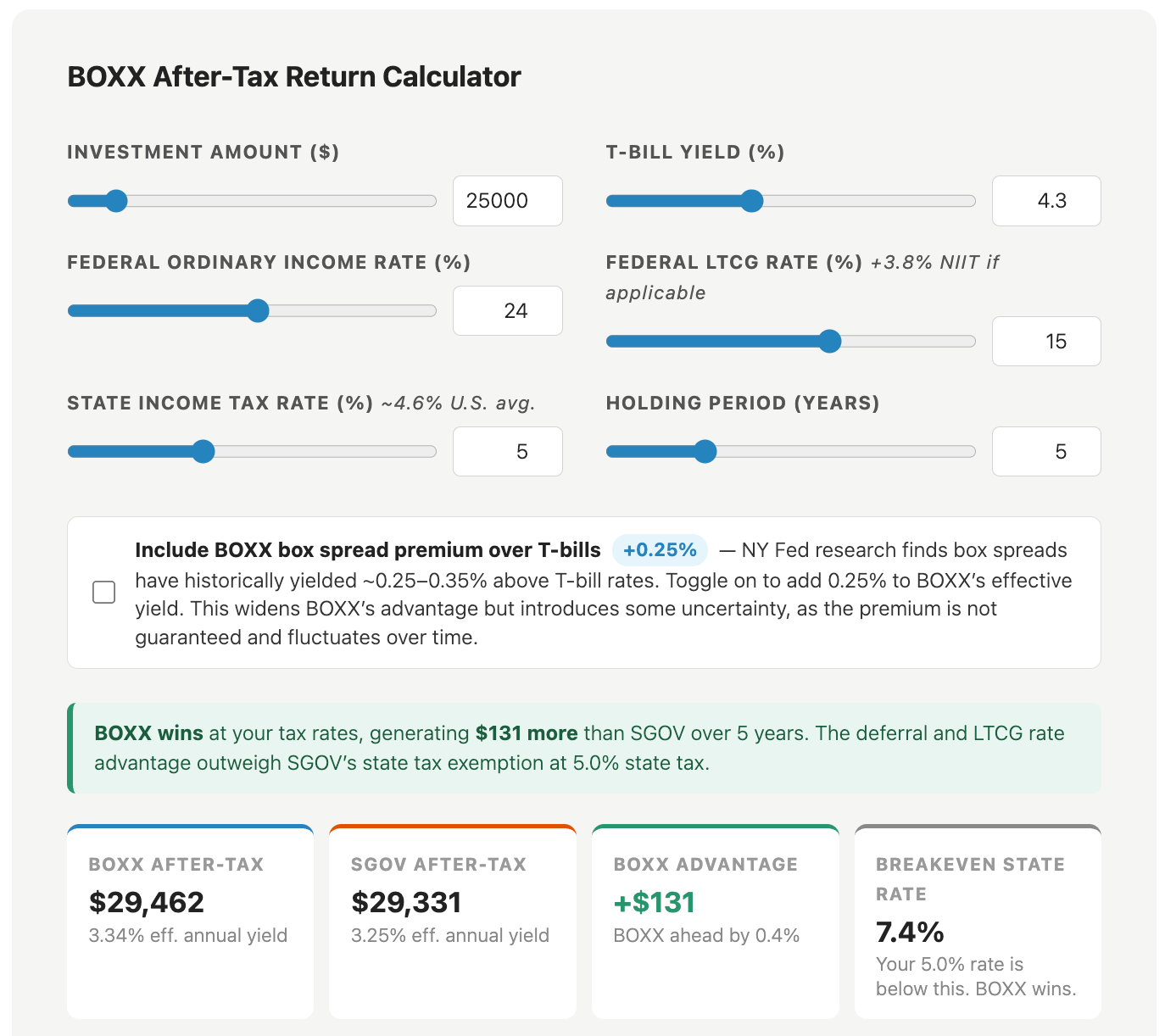
This calculator focuses primarily on the tax dimension of that difference. One additional nuance to keep in mind, again, is that box spreads have historically earned a ~0.25–0.35% premium above T-bill yields – a “convenience yield” that exists because Treasuries carry unique liquidity and safe-haven demand that box spreads don’t fully replicate. By default, this calculator ignores that premium for a cleaner apples-to-apples tax comparison, but you can toggle it on below to see the combined effect.
SGOV distributions are exempt from state income tax, because they’re Treasury interest. BOXX capital gains are subject to state tax. This narrows BOXX’s advantage significantly in high-tax states, and in some cases flips the outcome entirely. The breakeven state tax rate below shows exactly where that crossover happens for your inputs.
To state what may be obvious at this point, notice how BOXX’s advantage widens as one’s federal tax rate increases, but worsens as state tax rate increases, as again T-bills are exempt from state taxes. BOXX also obviously becomes increasingly advantageous as yield and holding period increase, as they allow for a higher total return and thus a wider gap.
Check out more financial calculators here.
