

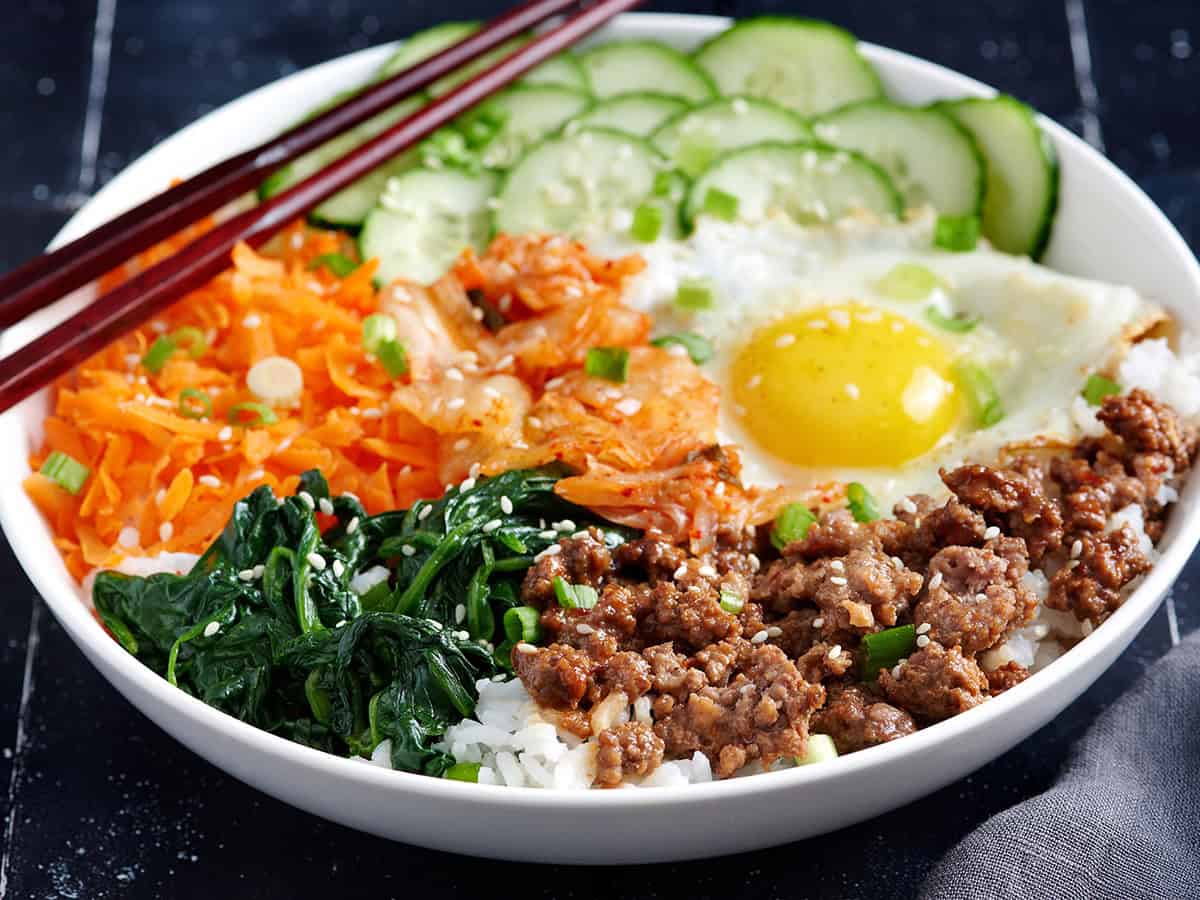
You guys know that I love my bowl meals, right?? They have everything you need in one bowl, with more flavor, texture, and color than you can shake a stick at. But the more I make them, the more they start to resemble bibimbap, the mother of all bowl meals. My version here layers jasmine rice with sesame spinach, chili garlic beef, fresh vegetables, kimchi, and a runny egg for a seriously delicious meal ready in about 35 minutes. While this isn’t a traditional bibimbap recipe, I think it still captures the colorful, savory, veggie-packed spirit of the dish using accessible ingredients and a flexible, budget-friendly approach!
Pin this recipe for later!
All recipes are rigorously tested in our Nashville Test Kitchen to ensure they are easy, affordable, and delicious.
“This recipe has been in my regular rotation for years so I thought I should post a review. It is one of my family’s favorites. We vary the toppings, any veg works from asparagus, cooked greens, broccoli, carrots, pickled carrots, etc. Definitely add a soft fried egg. You can double this recipe very easily.”
Colleen
Budget-Friendly Bibimbap
If you’ve never heard of bibimbap, it’s a Korean dish made with rice, seasoned vegetables, sauce, and often meat (usually marinated beef) and egg. There are many different versions, including ones served in a room temperature bowl with rice and toppings, versions with raw beef or egg, and dolsot bibimbap, which comes sizzling in a hot stone bowl and creates a crisp, golden layer of rice on the bottom. If you ever get the chance, I definitely recommend trying traditional bibimbap at a Korean restaurant so you can experience the real deal!
This version is a simple, at-home take made with ingredients I can easily find at my regular grocery store. I focused on keeping the same colorful, savory, mix-it-all-together spirit with fluffy jasmine rice, sesame spinach, chili garlic beef, crisp fresh vegetables, kimchi, and a runny egg. My biggest goal with this recipe was making sure every part of the bowl added something different, even if the ingredients used aren’t strictly traditional! The beef adds a sweet-salty heat, the spinach adds nutty sesame flavor, the fresh vegetables keep it crunchy, and the kimchi adds tangy brightness. It’s genuinely so good and so more-ish.
- Use leftover rice if you’ve got it! Fresh jasmine rice works great, but leftover rice makes this bowl even easier to pull together. Either warm it in the microwave (sprinkle with a little water first, then cover and heat until steamy) or heat it in a skillet with a little oil, so it gets a little crispy if you want it warm.
- Add some gochujang. Gochujang is a Korean fermented red chile paste with a salty, spicy, slightly sweet flavor. It’s a staple in many traditional bibimbap recipes. I didn’t have any on hand, so I used kimchi to add tangy, spicy, fermented flavor and crunchy texture instead. If you have gochujang, use it in place of the chili garlic sauce in the beef, or serve it on the side and mix it in.
- Cooked ground beef keeps it budget-friendly. Instead of sliced steak or raw beef (like some traditional recipes use), I use ground beef because it’s affordable, quick-cooking, practical, and is easy to stretch across four bowls. It still brings plenty of savory flavor, especially once it’s coated in chili garlic sauce, soy sauce, and brown sugar!
- Add a fried egg. Alongside raw beef, some recipes add a raw egg yolk, which cooks slightly when everything is mixed together in a hot stone bowl. Since this recipe isn’t made in a sizzling stone bowl, I use a fried egg instead. You still get that rich yolk to stir into the rice and toppings, but in more practical way for everyday home cooking. A soft-boiled egg is also delicious here!
- Swap the ground beef. I only use ½ lb. ground beef for all four bowls. The rice and toppings make it plenty filling! You could stretch the beef even further by adding chopped mushrooms. Ground chicken, turkey, pork, or your favorite vegetarian alternative will all work well too.
Bibimbap Bowl
Cost $10.25 recipe / $2.56 serving
This colorful and flexible bowl is my simple interpretation of Bibimbap, a delicious Korean rice bowl meal.
Gather and prepare all ingredients.
If your rice is not already cooked, begin that first and prepare the rest of the bowl ingredients as the rice cooks. You’ll need 4 cups of cooked rice.
Prepare the sautéed spinach next. Heat a large skillet over medium flame and add the cooking oil. Swirl to coat the skillet, then add the fresh spinach. Sauté the spinach for a few minutes, or just until it is wilted. Drizzle the sesame oil over top and season with salt. Remove the spinach from the skillet to a clean bowl.
Add the ground beef to the skillet used to cook the spinach. Cook the beef until fully browned. Drain the excess grease with paper towels.
Then add the chili garlic sauce, soy sauce, and brown sugar. Stir and cook for about one minute, or until everything is evenly mixed and the beef is coated in sauce. Turn the heat off.
Prepare the fresh vegetables. Peel and grate the carrot using a large-holed cheese grater. Thinly slice the cucumber and slice the green onions.
Fry or soft boil 4 large eggs (Or however many bowls you plan on eating immediately. If meal prepping, cook the eggs fresh each day.)
Build the bowls by first adding 1 cup cooked rice to the bowl, followed by 1/4 of the cooked spinach, ¼ of the ground beef, some sliced cucumber, shredded carrots, a cooked egg, and a tablespoon or so of kimchi. Sprinkle sliced green onions and sesame seeds over top. There are no hard measurements needed for each ingredient per bowl; just divide the ingredients evenly or as you see fit.
See how we calculate recipe costs here.
*Since this recipe isn’t made in a hot stone bowl, I had to sacrifice the crisp, toasted rice bottom I’d usually get if I ordered this dish at a restaurant. Instead, the rice is soft and fluffy under all the savory toppings. If you want a little crisp texture, you can press the cooked rice into a lightly oiled hot skillet for a few minutes before assembling the bowls.
**Chili garlic sauce is a chunky red chile, garlic, and vinegar condiment that adds heat and acidity to the beef. Sambal also works or you can use Sriracha. Adjust the heat of your finished bowl by adding more or less chili garlic sauce!
***Bibimbap bowls are typically made with a gochujang sauce. Gochujang is a thick Korean fermented red chile paste with a salty-spicy flavor. Kimchi doesn’t replace the same thick, saucy texture, but it does add a fermented depth, crunch, and brightness. I personally like Wildbrine kimchi when I find it on sale! It’s vegan and less fishy than some traditional brands, but use any kimchi you already enjoy.
Serving: 1servingCalories: 511kcal (26%)Carbohydrates: 57g (19%)Protein: 23g (46%)Fat: 21g (32%)Sodium: 1010mg (44%)Fiber: 3g (13%)
The nutrition data is automatically calculated using all ingredients listed on the recipe card, including any listed as optional. Percentages are of daily value.
How to Make Bibimbap Step-by-Step Photos
Gather all of your ingredients.
Cook the rice, if needed: If you don’t already have 4 cups cooked jasmine rice, start it first so it can cook while you prepare the toppings. You’ll need about 1⅓ cups uncooked jasmine rice to make 4 cups cooked rice.
For the fluffiest texture, rinse the rice first until the water looks less cloudy, then cook it according to the package directions or use my stovetop method with a tight-fitting lid: once the rice comes to a boil, reduce the heat to low, let it gently simmer for 15 minutes without stirring or lifting the lid, then let it rest off the heat for 5 minutes before fluffing with a fork. That short rest helps the steam finish the job, so the rice is tender instead of wet or crunchy.
Cook the spinach: Heat ½ Tbsp cooking oil in a large skillet over medium heat. Add 6 cups fresh spinach and cook for 2-3 minutes, stirring often, just until the spinach turns glossy, dark green, and wilted. It’ll look like a lot at first, but it shrinks down quickly.
Drizzle 1 tsp toasted sesame oil over the spinach, sprinkle with ¼ tsp salt, then stir to coat. Transfer the spinach to a clean bowl and set it aside.
Brown the beef: Add ½ lb. ground beef to the same skillet you cooked the spinach in. Cook over medium heat, breaking it into small crumbles as it browns, until no pink remains and the edges look slightly browned. My skillet still had enough residual oil from the spinach that I didn’t need to add any more for the beef (WIN).
If there is a lot of grease in the skillet, carefully blot or drain off the excess so the sauce can coat the beef instead of sliding off.
Season the beef: Add 2 Tbsp chili garlic sauce, 1 Tbsp soy sauce, and 1 Tbsp brown sugar to the browned beef. Stir well and cook for about 1 minute, or until the sugar dissolves and the beef looks evenly coated in a glossy and savory-sweet sauce. Turn off the heat.
Prep the fresh vegetables: Peel and grate 1 carrot using the large holes on a box grater. Thinly slice 1 English cucumber into rounds or half-moons, depending on the size of the cucumber, and slice 2 green onions.
Cook the eggs: Fry or soft boil 4 large eggs, depending on how you like them. I like a slightly runny yolk here because it mixes into the rice and sauce. If you’re meal prepping, cook only the eggs you plan to eat right away and make fresh eggs for the remaining bowls later.
Assemble the bowls: Then just throw everything together in a bowl! There is no hard or fast rule for proportions of the ingredients, just divide them up evenly or however it works for you. Start with 1 cup cooked jasmine rice, then top each portion with about ¼ of the sautéed spinach, ¼ of the chili garlic beef, some grated carrot, sliced cucumber, one cooked egg, and about 1 Tbsp kimchi. Finish with sliced green onions and a sprinkle of sesame seeds. Enjoy!
What Else Can I Add?
This dish is totally flexible, and you can add or remove ingredients as you see fit. Bibimbap is often made with leftovers from other meals (like Korean BBQ), so feel free to mix and match based on your budget and fridge situation:
- Pickled carrots: Add tangy crunch and brighten up the savory beef and rice. I’d use these in place of the shredded carrot.
- Sautéed mushrooms: Either chop them up and sauté with the beef, or use them as a separate topping.
- Fermented vegetables: These bring a punchy flavor that makes the whole bowl taste more layered. I use kimchi, but any fermented vegetables you like can add a similar zip.
- Bean sprouts: Add a fresh crunch and are a classic topping.
- Zucchini: Cooks quickly in a skillet and adds a soft, mild vegetable layer that works well with sesame oil.
- Shredded cabbage: Adds budget-friendly crunch and helps bulk up the bowl.
- Gochujang: Adds a more classic salty, spicy, slightly sweet bibimbap flavor if you have it.
This recipe makes four filling bowls, so you really don’t need any sides. Just spoon everything over the rice, break the egg yolk, and mix it all together so every spoonful gets a little beef, vegetable, kimchi, rice, and egg! If you don’t love a runny egg yolk, you can either cook your fried egg until well done or swap it with a hard boiled egg.
Storage, Reheating & Meal-Prepping
This bibimbap-inspired bowl is perfect for meal prepping. Simply pack up about four bowls at a time in resealable containers and refrigerate for up to 3-4 days, and enjoy as grab-and-go lunches. You can either fry up an egg fresh each day, or substitute the runny-yolk fried egg with a hard boiled egg.
If you prefer, reheat the rice and beef in the microwave until hot, then add the fresh vegetables, kimchi, and egg just before serving. You can also freeze the rice and beef for 2-3 months, then thaw, reheat, and build a fresh bowl with the toppings.
Try These Delicious Bowl Meals Next:
- The best part of these Poor Man’s Burrito Bowls is how easily they turn leftover veggies, chicken, or avocado into a fuller meal!
- Sushi Bowls give you the flavor of a sushi bar without the rolling, slicing, or restaurant bill.
- These Slow Cooker Chicken Taco Bowls are my idea of an easy win when I want something filling without standing at the stove.
Our Bibimbap recipe was originally published 1/12/17. We have updated it to be the best it can be and republished 6/3/26.
