

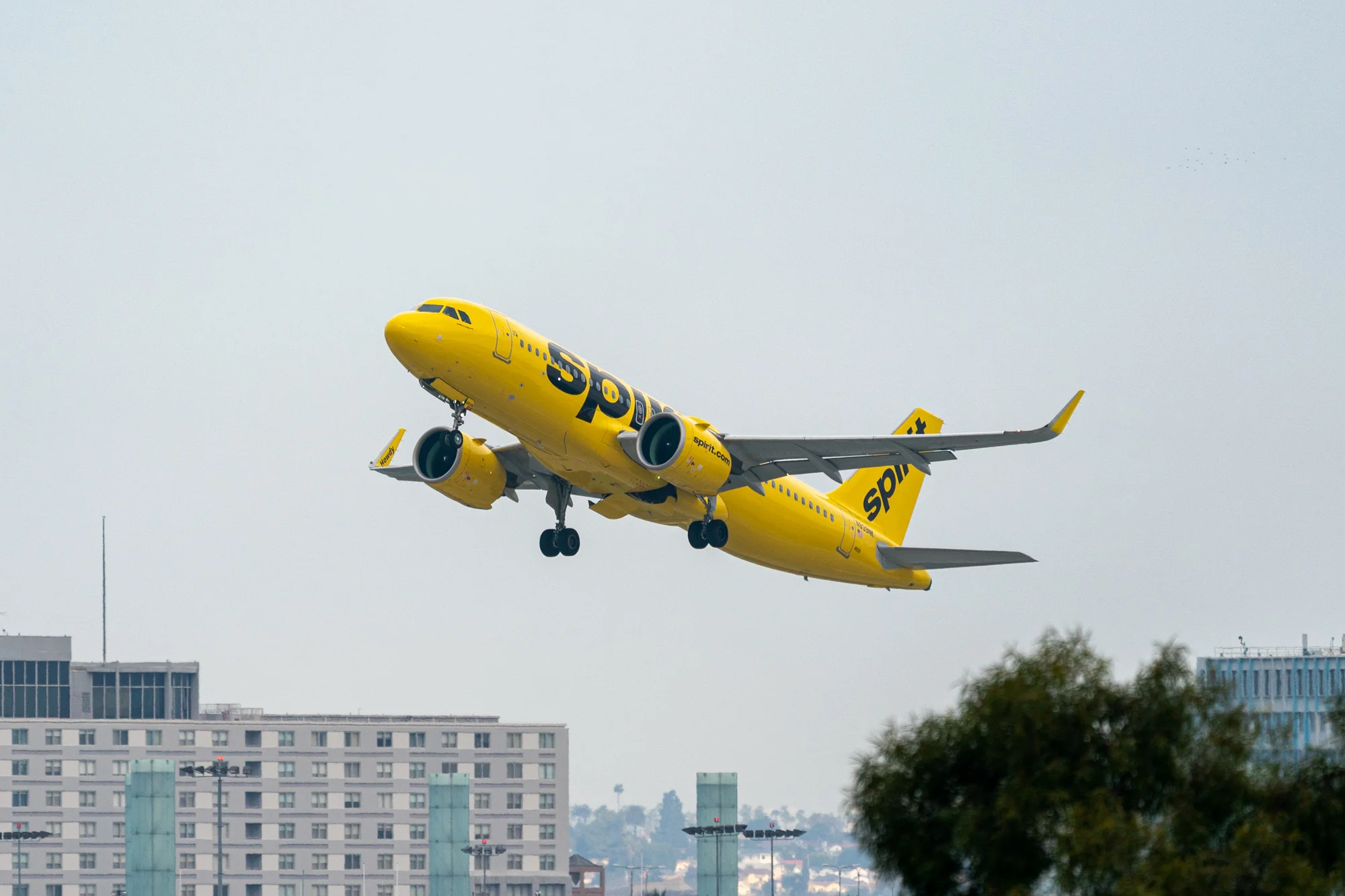
Spirit Airlines has officially closed its doors, suspending operations in the early morning hours of Saturday.
The airline, which was first reported to be considering liquidation several weeks ago announced shortly after 3 a.m. EDT Saturday that all flights had been canceled, and said that travelers should not go to the airport.
The abrupt grounding of aircraft left travelers, pilot and flight attendants stranded at airports across the country, and thousands of employees without jobs.
Spirit has roughly 9,500 employees, according to a source familiar with the matter, although that number increases to 17,000 when including contractors.
Spirit Airlines Airbus A320 taxis at Hartsfield-Jackson Atlanta International Airport (ATL). SEAN CUDAHY/THE POINTS GUY
The U.S. Department of Transportation, in a statement issued early Saturday, said a number of big airlines had agreed “to a series of actions … to support Spirit ticketholders, the general flying public, and airline employees impacted by Spirit ceasing operations.”
Among those were the availability of reduced and “rescue” fares by former rivals on routes Spirit flew, with details varying by carrier. The DOT also said most major airlines were extending travel privileges to former Spirit employees and that they would receive “preferential employment interviews to ensure they jump the queue.”
COMPLETE COVERAGE FROM TPG: Spirit Airlines shuts down
The Florida-based airline had hoped to exit its second bankruptcy by this summer after reaching an agreement with creditors in late February; it was in the process of shrinking its fleet and reconfiguring its network in an effort to find a more viable business model.
Reward your inbox with the TPG Daily newsletter
Join over 700,000 readers for breaking news, in-depth guides and exclusive deals from TPG’s experts
By signing up, you will receive newsletters and promotional content and agree to our Terms of Use and acknowledge the data practices in our Privacy Policy. You may unsubscribe at any time.
Since the start of the U.S. war in Iran, the price of jet fuel has surged, wiping out the small profit margin Spirit hoped to achieve as it exited bankruptcy and causing the airline to burn through its cash reserves faster than expected. Jet fuel is the second-largest operating expense for airlines (after labor), and it typically accounts for roughly a third of an airline’s expenses.
While higher fuel costs have put the squeeze on the entire airline industry, Spirit’s already-fragile position left it in weaker shape than most of its competitors.
Spirit had struggled to return to profitability since the coronavirus pandemic, with a wide array of headwinds working against the airline. These include rising costs and an engine defect that forced the carrier to ground a significant portion of its fleet for long periods of inspection and repair.
The airline made changes to its business model in recent years to try and thrive in the current economy: It tried shrinking its footprint and network, as well as adding first-class seats to try and earn crucial premium revenue. However, the changes appear to be too little, too late.
Related: Spirit could shut down: here’s what travelers should know
The airline had flown about 1.8% of U.S. airline capacity, according to airline analyst Tom Fitzgerald of TD Cowen.
Spirit tried to merge with JetBlue in a deal that would have seen the New York-based airline acquire and absorb Spirit, but the merger was blocked by a federal judge in 2024 after the Biden administration sued on antitrust grounds. During the trial, Spirit’s then-CEO Ted Christie testified that without being acquired, Spirit would be at risk of shutting down.
Even travelers who seldom flew Spirit could feel the effects of its demise. Ultra-low-cost carriers have historically helped keep airfare down, pressuring the larger airlines by undercutting base fare prices. Now, the airline industry has one fewer low-cost competitor.
This is a developing story, which will be updated with new information as it becomes available.
Sean Cudahy and Ben Mutzabaugh contributed reporting.
