

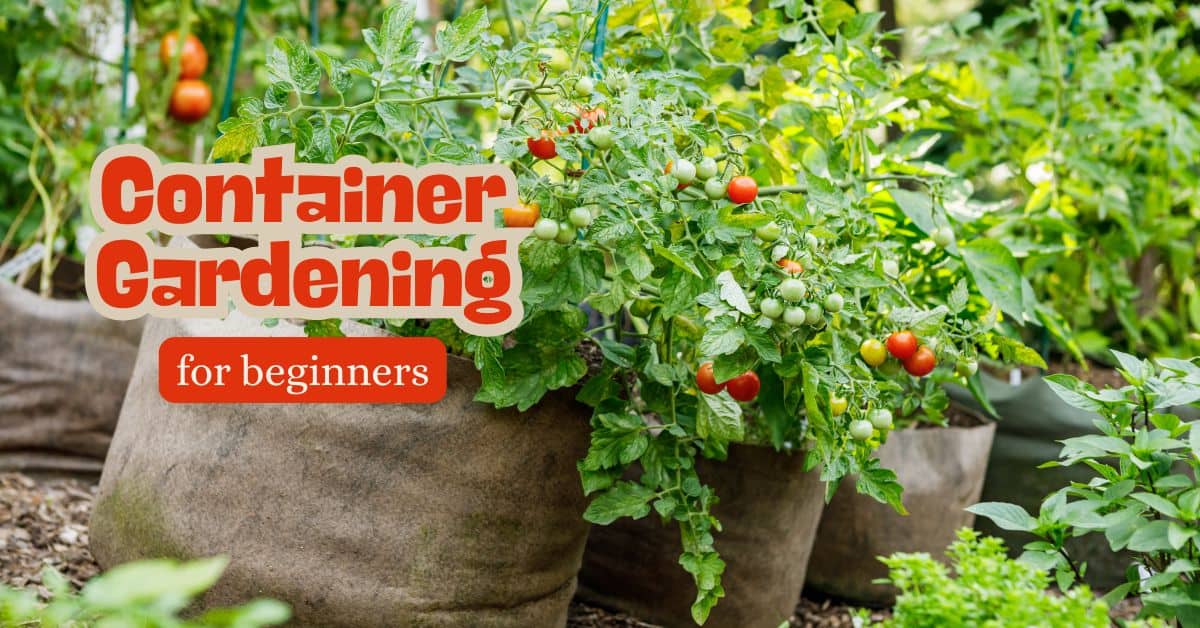
Container Gardening for Beginners: How to Start Container Gardening
Not everyone has access to a large backyard or plantable land, which is why container gardening for beginners is such a great option. Growing fruits, vegetables, and herbs in pots allows you to enjoy fresh, healthy produce all summer long. Even if you only have a patio, balcony, or small outdoor space!
For where I’m currently at in life, container gardening has been the perfect solution. It’s much more manageable than a traditional garden because there’s very little weeding involved and no need to till up the ground. Really, the biggest maintenance task is simply keeping everything watered regularly!
Not only is container gardening convenient, but it can also help save money, which is especially important with grocery prices constantly increasing. Even growing a few vegetables at home can help stretch your food budget during the summer months.
While I’m definitely not an expert, I’ve picked up a few helpful tips along the way that can make container gardening for beginners feel a lot less overwhelming.
(Note: The links in this post may be affiliate links. Read the disclosure policy here.)
Start small
The first year I tried container gardening, I got a little too ambitious. Instead of starting with just a few plants, I bought nearly every variety labeled for small spaces. At first I was excited, but as the summer went on, it became harder to keep up with everything and many of my plants ended up neglected.
Since then, I’ve learned that one of the best container gardening tips is to start small. Think honestly about how much time and energy you’ll have to care for your plants throughout the season. Starting with just a few containers is a great way to build confidence and enjoy the process without feeling overwhelmed.
Buy your seeds and plants
One of the great things about container gardening for beginners is that it’s become incredibly popular, which means there are now a lot of seed and plant varieties specifically designed for compact spaces.
I’ve found special “Urban Garden Collection” seeds that are meant for pots and small gardens, and there are plenty of compact vegetable varieties available at garden centres as well. Even Amazon Canada carries seeds now, making it easier than ever to get started.
If you’re unsure what grows best in pots, vegetables like lettuce, herbs, radishes, peppers, tomatoes, peas, and beans are all popular choices for container gardens. For a more in depth look at the types of plants that do best in containers, see my post The Best Vegetables for Container Gardening.
Get the right pots
Starting a container garden doesn’t have to be expensive. In fact, many of my containers were free! I used large black 5-gallon buckets that trees and shrubs originally came in. Garden centres and greenhouses often sell used containers cheaply, and you can also check places like Facebook Marketplace for affordable options.
Grow bags are another excellent option for beginner gardeners because they’re lightweight, inexpensive, and easy to store during the off-season.
When choosing containers, make sure they’re large enough for the plants you want to grow. Larger vegetables like tomatoes, peppers, potatoes, peas, and beans need deeper pots with lots of room for roots. Smaller plants like lettuce, herbs, onions, and radishes can grow well in shallower containers.
Find the right light
Sunlight is one of the most important factors in successful container gardening. Most vegetables need several hours of direct sunlight each day in order to thrive.
I keep most of my containers on our back patio where they receive lots of afternoon sun. However, I place my lettuce containers in a cooler area that only gets morning sun because lettuce tends to struggle in extreme heat.
Always check your seed packets or plant labels to see how much sunlight each plant prefers.
Use good potting soil
One of the biggest mistakes beginners make is using regular garden soil in containers. For healthy plants, it’s important to use a good quality potting mix instead. Potting soil is specially designed to provide proper drainage and airflow, which helps prevent root rot and other problems.
If you’re filling large containers, the cost of soil can add up quickly. To save money and reduce the weight of heavy pots, try filling the bottom portion with lightweight materials like crushed pop cans, empty milk jugs, packing peanuts, or old plastic nursery pots before adding soil on top.
Plant, Water, Wait
Now comes the fun part. Planting! Follow the directions on your seed packets or plant labels for spacing and planting depth. Once everything is planted, water your containers thoroughly.
For tiny seeds like lettuce, using a spray bottle or gentle watering can help prevent seeds from washing away.
After that, all that’s left to do is keep watering regularly, enjoy watching your plants grow, and wait for harvest time!
Book Recommendation
I always like having a good gardening book on hand for quick reference. There’s so much conflicting information online that sometimes it’s nice to have a reliable guide nearby. Small-Space Vegetable Gardens: Growing Great Edibles in Containers, Raised Beds, and Small Plots has been one of my favourite resources for learning more about container gardening.
I hope these simple tips for container gardening for beginners help you feel more confident about starting your own garden this year! Have you ever tried growing vegetables in containers? What would you love to plant first?
